Insight4 min read

The scent that works is the one you like.

Twenty-four people, three scents, a set of cognitive tests and brain-wave recordings. Sweet orange, which everyone liked, raised performance. White vinegar, which nobody liked, lowered it. And peppermint, this is the important part, helped only those who liked it.

Written by the Shizen teamSource: Building and Environment, vol. 271, article 112603 — March 2025All Insight articlesOriginal article in English. Also available in Bahasa Indonesia and Japanese.
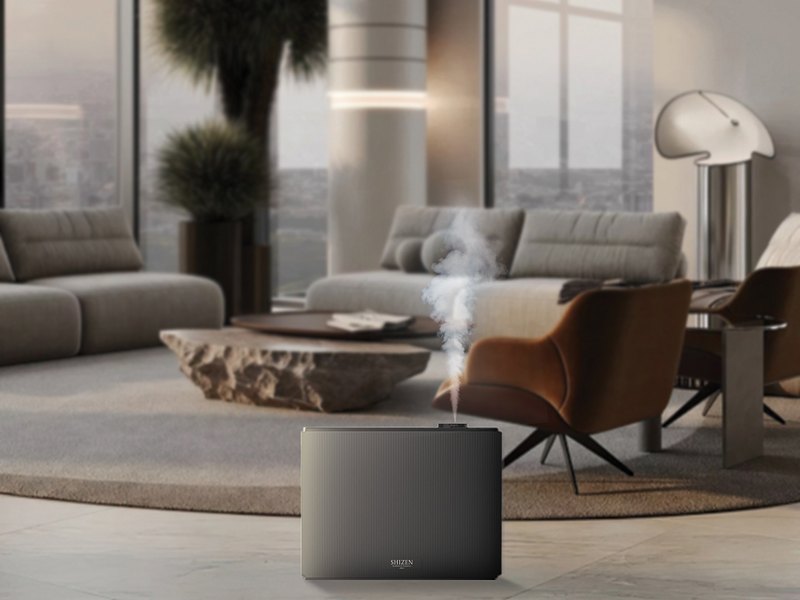
Wall-mounted Shizen SBV1 in a modern lounge with plants and a sofa
A wall-mounted Shizen SBV1 in a lounge. The same scent can help one person and bother another — which is why Shizen always trials two or three scents with the team. Image: Shizen.
24participantscognitive tests, questionnaires, EEG
3scents: peppermint, sweet orange, white vinegarliked, disliked, and split
15 : 9liked : disliked peppermintand the results followed the preference

Before choosing a scent for an office, there is one finding every owner of a space should know. A research team from Qingdao, China, published it in the journal Building and Environment in March 2025: the effect of a scent on cognitive performance depends on whether the person likes it.1 Not only on the kind of scent. On the liking.

Three scents, one test

Chosen so that one was liked, one disliked, and one split the room.

The researchers picked the three scents deliberately. Sweet orange, which all 24 participants liked. White vinegar, which nobody liked. And peppermint, which split the room: 15 liked it, 9 did not. Each participant did cognitive tests under each scent, filled in questionnaires on comfort and attention, and had their brain waves (EEG) recorded in two test rooms of 3 by 2.7 metres.1

The results

Pleasant first, then sharp.

Under sweet orange — and under peppermint for those who liked it — participants’ pleasantness rose, and cognitive performance rose with it. Under white vinegar the opposite happened. The very same peppermint gave a larger cognitive improvement in the group that liked it than in the group that did not.1
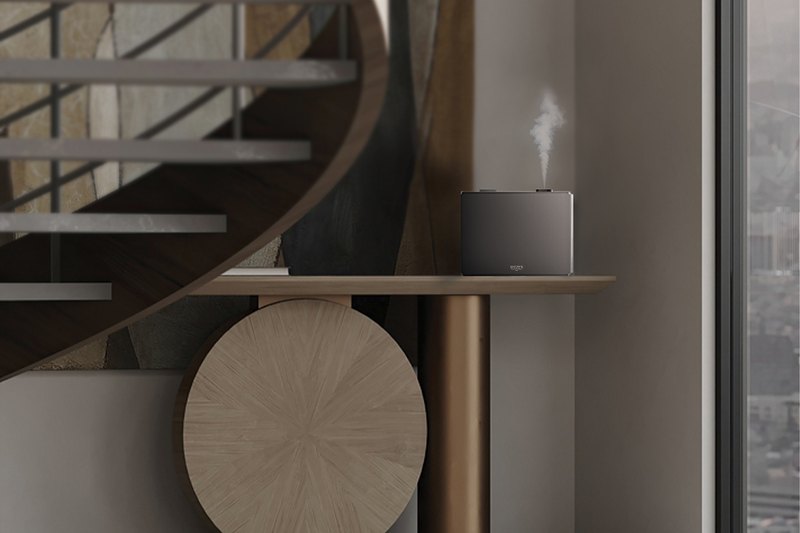
Shizen SBV1 beside a spiral staircase
A Shizen SBV1 beside a staircase. Intensity is set from the app, so the scent can be turned down without switching the system off. Image: Shizen.

The brain recordings explain the mechanism: theta-wave power (a sign of falling attention) correlated negatively with performance, while beta-wave power, pleasantness, attention level and the odour-comfort rating correlated positively. In other words: a pleasant scent makes people more alert, and more alert people work better. Invigorating scents do have an effect — but it is filtered through taste.

The same scent can help one person and bother another.
Why it matters for an office

One person’s choice can fail for thirty.

In many offices the scent is chosen by one person — the owner, the building manager, or the supplier. This study shows the risk: a scent the owner loves can lower the performance of the part of the team that does not. That is why Japan’s largest bank chose its scent by a vote of employees and customers, and nine in ten voters liked it. The key is not the scent one person likes most, but the scent nobody dislikes.

What it means for your space

Before choosing an office scent.

1

Test with the team, not in the boardroom.

Run two or three scents in turn, a few days each, in the rooms people actually use. Ask one question: does anything bother you? The scent that passes is the one nobody complains about.

2

Look for neutral-pleasant.

In this study sweet orange was liked by everyone. Citrus, green tea and soft woods rarely split a team; sweet or very distinctive scents split it more often.

3

Low intensity, and adjustable.

People who dislike a scent are usually bothered by its strength, not its kind. Shizen machines are set from the app — intensity, schedule, working hours — so the scent can be turned down without switching the system off.

How Shizen does it

A Japanese brand, rented monthly.

Shizen is a Japanese brand — by Botanica Fragrance Japan — with more than 100 fragrances, including a series inspired by five-star hotels. The system is rented monthly: machine, installation, fragrance oil, regular servicing and unit replacement included, minimum contract 12 months. A free site survey, no commitment.

Portable · SBX115–30 m²Rp597,000 / monthboutiques, clinics, meeting rooms, reception desks
Cozy · SBA181–200 m²Rp998,000 / monthrestaurants, showrooms, retail floors, gyms
Prestige · SBA2201–300 m²Rp1,186,000 / monthhotel lobbies, executive offices, flagship boutiques

Plan prices as of September 2026. All six plans, up to 2,000 m², are on the home page.

Shizen SBA2
Sources and notes

Where these figures come from.

  1. Zhen Tong, Xiaorui Liu, Yulong Song, Hongyu Guan, Xinran Wen, Songtao Hu, Mingli Lu (Shandong Engineering Research Center of Healthy Environment and Low-Carbon Energy, Qingdao), Building and Environment, vol. 271, article 112603. Participant numbers, scents and EEG correlations are taken from the paper’s abstract and summary, not from Shizen’s own measurements.
  2. Shizen is not affiliated with the companies, media or researchers named in this article; they are cited as sources.
  3. The effect of a scent on a space depends on the room, the intensity and the fragrance chosen. That is why we always start with a site survey and a trial of two or three scents.