Sebuah peternakan ayam di Miyazaki memasang lembar penghilang bau di langit-langit kandangnya. Produsen aroma membantu kantor-kantor menjadi lebih produktif. Alasannya, menurut Nikkei, sama: tempat kerja yang nyaman lebih mudah merekrut orang, dan lebih mudah mempertahankannya.
Ditulis oleh tim ShizenSumber: Nikkei, 17 September 2026 · S.T. Corporation, Mei 2026Semua artikel InsightTerjemahan Bahasa Indonesia oleh tim Shizen dari artikel asli berbahasa Jepang.
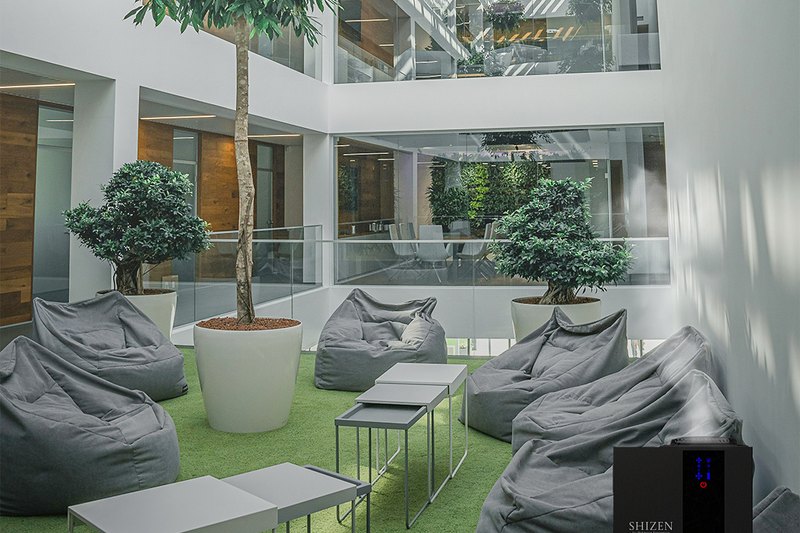
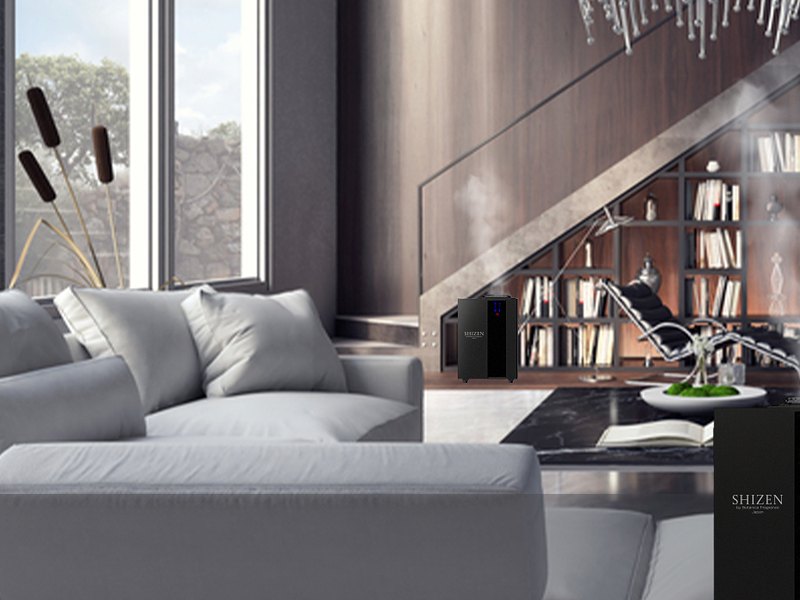
Shizen SBV1 di sebuah lounge kantor. Di Jepang, kenyamanan udara di tempat kerja mulai dihitung sebagai alat rekrutmen. Visual: Shizen.
40.000ekor ayam di satu kandang yang dipasangi lembar S.T.–TorayPeternakan Kawano, Miyazaki
2tujuan baru: rekrutmen dan retensimenurut laporan Nikkei
Mei 2026kota Miyazaki dan S.T. bersepakatuji di peternakan dan kebun binatang
Pada September 2026 Nikkei melaporkan gerakan baru di Jepang: teknologi aroma dipakai untuk memperbaiki lingkungan kerja.1 S.T., produsen pewangi, memasang lembar penghilang bau di lokasi peternakan; produsen produk aroma membantu meningkatkan produktivitas kantor. Dan tujuan yang disebut laporan itu bukan lagi “supaya harum”, melainkan supaya orang betah bekerja — sehingga perusahaan lebih mudah merekrut dan mempertahankan karyawan.
Kandang ayam di Miyazaki
Jika peternakan berinvestasi pada udara, kantor pun bisa.
Laporan itu dibuka di sebuah peternakan ayam di Miyazaki yang memelihara sekitar 40.000 ekor ayam pedaging. Di dalam kandang, kipas memutar udara, dan di langit-langit serta dinding terpasang lembaran cokelat — lembar penghilang bau yang dikembangkan S.T. bersama Toray.1 Beberapa bulan sebelumnya, pada Mei 2026, S.T. dan Pemerintah Kota Miyazaki menandatangani kerja sama untuk menguji penanganan bau di peternakan, fasilitas kompos dan kebun binatang kota, memakai ekstrak pohon cemara Hokkaido yang dinamai ClearForest.2
Kenapa sebuah peternakan mau membayar untuk udara? Karena pekerjaan di sana berat, dan bau adalah alasan paling sering orang tidak mau bekerja di tempat seperti itu. Udara yang lebih enak adalah fasilitas kerja — sama seperti AC — dan laporan Nikkei menempatkannya tepat di situ: alat untuk merekrut dan mempertahankan orang.
Udara yang enak adalah fasilitas kerja — sama seperti AC.
Dari peternakan ke kantor
Produktivitas, lalu retensi.
Di ujung lain, laporan yang sama menyebut produsen produk aroma yang membantu kantor-kantor meningkatkan produktivitas.1 Logikanya satu garis dengan peternakan tadi. Di negara yang kekurangan tenaga kerja, perusahaan bersaing bukan hanya dengan gaji, tetapi dengan bagaimana rasanya berada delapan jam sehari di tempat itu — dan udara adalah bagian dari rasa itu yang paling sering diabaikan.
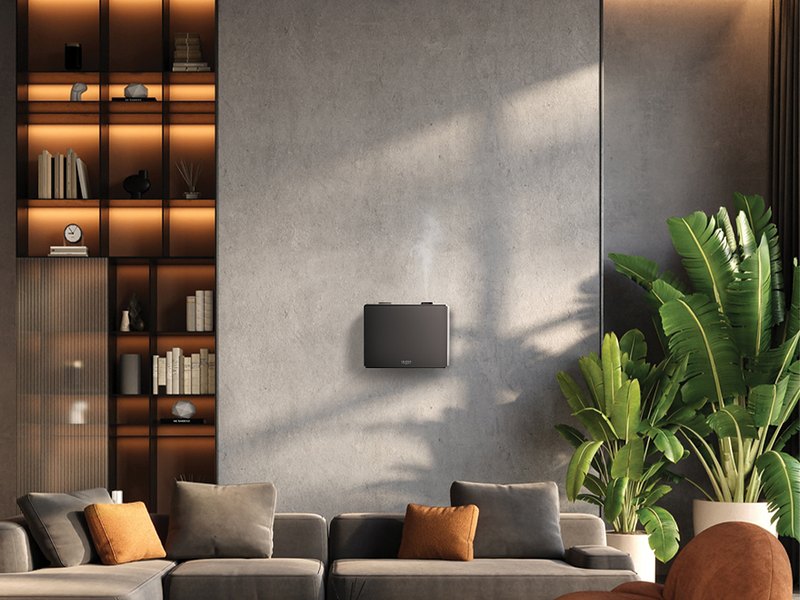
Shizen SBA1 di atrium sebuah kantor. Ruang yang karyawan pakai setiap hari — bukan hanya lobi tamu — yang menentukan apakah orang betah. Visual: Shizen.
Yang menarik, ini bukan lagi urusan bagian umum atau fasilitas. Begitu alasannya menjadi “rekrutmen dan retensi”, aroma pindah ke meja HR. Itulah perubahan yang dicatat laporan itu.
Apa artinya di Indonesia
Mulai dari ruang yang karyawan pakai, bukan hanya tamu.
Di Indonesia, pengharum ruangan biasanya dipasang untuk tamu: lobi, showroom, ruang tunggu. Padahal ruang yang menentukan apakah orang betah adalah yang mereka pakai setiap hari — ruang kerja terbuka, pantry, area lift, ruang istirahat, dan bengkel atau gudang yang menempel pada showroom. Di sanalah bau yang tidak enak dibiarkan bertahun-tahun, dan di sanalah calon karyawan membentuk kesan pertamanya saat wawancara.
Apa artinya untuk ruang Anda
Untuk tempat kerja, bukan hanya lobi.
1
Periksa ruang yang karyawan pakai.
Pantry, area lift, ruang istirahat, ruang kerja terbuka. Tanyakan pada dua–tiga karyawan baru apa yang pertama mereka cium saat masuk — jawabannya biasanya jujur.
2
Hilangkan bau dulu, baru beri aroma.
Aroma yang dipasang di atas bau lama hanya membuat campuran yang lebih buruk. Mulai dari ventilasi dan sumber bau. Setelah itu, satu unit SBA1 mencakup ruang kerja sampai 200 m², dan SBV1 lewat AC sentral mencakup satu lantai penuh.
3
Jadikan ini keputusan HR, bukan hanya fasilitas.
Biaya sewa bulanan Shizen lebih kecil daripada satu kali mengganti karyawan yang keluar. Hitung dengan angka turnover Anda sendiri.
Bagaimana Shizen mengerjakannya
Merek Jepang, disewa bulanan.
Shizen adalah merek Jepang — by Botanica Fragrance Japan — dengan lebih dari 100 aroma, termasuk seri yang terinspirasi hotel bintang lima. Sistemnya disewa bulanan: mesin, instalasi, fragrance oil, perawatan berkala dan penggantian unit termasuk, kontrak minimum 12 bulan. Survei ruang gratis, tanpa komitmen.
Harga paket per September 2026. Enam paket lengkap, sampai 2.000 m², ada di halaman utama.
Sumber dan catatan
Dari mana angka-angka ini.
Nihon Keizai Shimbun, 17 September 2026. Peternakan di Miyazaki (sekitar 40.000 ekor), lembar penghilang bau S.T.–Toray, peran produsen aroma untuk kantor, dan tujuan rekrutmen-retensi diambil dari bagian terbuka artikel; teks lengkapnya hanya untuk pelanggan.
S.T. Corporation (PR TIMES), 18 Mei 2026: kerja sama S.T. dan Kota Miyazaki untuk penanganan bau di peternakan, fasilitas kompos dan kebun binatang, dengan uji produk berbahan ClearForest (ekstrak cemara Hokkaido) di Kebun Binatang Phoenix Miyazaki dan peternakan Kawano.
Shizen tidak berafiliasi dengan perusahaan, media atau peneliti yang disebut di artikel ini; mereka disebut sebagai sumber.
Efek aroma pada suasana ruang bergantung pada ruang, intensitas dan aroma yang dipilih. Karena itu kami selalu mulai dengan survei ruang dan uji dua–tiga aroma.
A poultry farm in Miyazaki lined the ceiling of its sheds with deodorising sheets. Aroma makers are helping offices become more productive. The reason, Nikkei reports, is the same: a comfortable workplace is easier to recruit for, and easier to keep people in.
Written by the Shizen teamSources: Nikkei, 17 September 2026 · S.T. Corporation, May 2026All Insight articlesEnglish translation by the Shizen team of the original article in Japanese.
A Shizen SBV1 in an office lounge. In Japan, comfortable air at work is starting to count as a recruiting tool. Image: Shizen.
40,000birds in one shed fitted with S.T.–Toray sheetsKawano farm, Miyazaki
2new aims: recruitment and retentionper the Nikkei report
May 2026Miyazaki City and S.T. sign uptrials at a farm and a zoo
In September 2026 Nikkei reported a new movement in Japan: scent technology used to improve working environments.1 S.T., the freshener maker, is installing deodorising sheets at livestock sites; makers of aroma products are helping offices raise productivity. And the aim the report names is no longer “to smell nice” but to make people comfortable at work — so that companies find it easier to recruit and keep employees.
A poultry house in Miyazaki
If a farm invests in air, an office can.
The report opens at a poultry farm in Miyazaki that raises about 40,000 broilers. Inside the sheds, fans circulate the air, and brown sheets line the ceiling and walls — deodorising sheets developed by S.T. together with Toray.1 A few months earlier, in May 2026, S.T. and Miyazaki City had signed an agreement to trial odour control at farms, composting facilities and the city zoo, using an extract of Hokkaido fir named ClearForest.2
Why would a farm pay for air? Because the work is hard, and smell is the most common reason people refuse to work in such places. Better air is a workplace facility — like air-conditioning — and the Nikkei report puts it exactly there: a tool for recruiting and keeping people.
Good air is a workplace facility — the same as air-conditioning.
From the farm to the office
Productivity first, then retention.
At the other end, the same report names makers of aroma products helping offices raise productivity.1 The logic runs in one line from the farm. In a country short of workers, companies compete not only on pay but on how it feels to spend eight hours a day in a place — and air is the part of that feeling most often ignored.
A Shizen SBA1 in an office atrium. The rooms staff use every day — not only the visitors’ lobby — decide whether people stay. Image: Shizen.
The interesting part is that this is no longer a facilities matter. Once the reason becomes “recruitment and retention”, scent moves to HR’s desk. That is the shift the report records.
What it means in Indonesia
Start with the rooms staff use, not only visitors.
In Indonesia, scenting is usually installed for visitors: lobby, showroom, waiting room. But the rooms that decide whether people stay are the ones they use every day — the open-plan floor, the pantry, the lift lobby, the rest room, and the workshop or warehouse attached to the showroom. That is where a bad smell is left for years, and where a candidate forms a first impression at the interview.
What it means for your space
For workplaces, not only lobbies.
1
Check the rooms staff use.
Pantry, lift lobby, rest room, open-plan floor. Ask two or three new employees what they smelt first on the way in — the answer is usually honest.
2
Remove the smell first, then add the scent.
A fragrance laid over an old smell only makes a worse mixture. Start with ventilation and the source. After that, one SBA1 unit covers a work floor of up to 200 m², and an SBV1 on the central air-conditioning covers a whole floor.
3
Make it an HR decision, not only a facilities one.
Shizen’s monthly rental costs less than replacing one employee who leaves. Run the numbers with your own turnover figure.
How Shizen does it
A Japanese brand, rented monthly.
Shizen is a Japanese brand — by Botanica Fragrance Japan — with more than 100 fragrances, including a series inspired by five-star hotels. The system is rented monthly: machine, installation, fragrance oil, regular servicing and unit replacement included, minimum contract 12 months. A free site survey, no commitment.
Plan prices as of September 2026. All six plans, up to 2,000 m², are on the home page.
Sources and notes
Where these figures come from.
Nihon Keizai Shimbun, 17 September 2026. The Miyazaki farm (about 40,000 birds), the S.T.–Toray deodorising sheets, the role of aroma makers in offices and the recruitment-and-retention aim are taken from the open part of the article; the full text is for subscribers.
S.T. Corporation (PR TIMES), 18 May 2026: the S.T.–Miyazaki City agreement on odour control at farms, composting facilities and the zoo, with product trials using ClearForest (Hokkaido fir extract) at Miyazaki’s Phoenix Zoo and the Kawano farm.
Shizen is not affiliated with the companies, media or researchers named in this article; they are cited as sources.
The effect of a scent on a space depends on the room, the intensity and the fragrance chosen. That is why we always start with a site survey and a trial of two or three scents.